
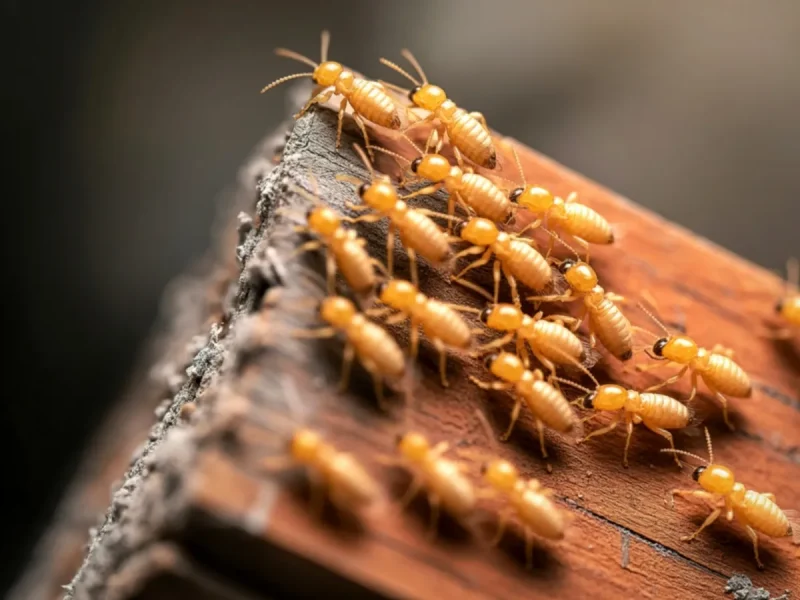
Many homeowners in British Columbia assume termites are not a concern in the province. While termite activity is less common here than in warmer regions, the risk does exist and is often overlooked. Termite infestations tend to develop quietly, allowing damage to progress unnoticed for long periods. Effective termite control BC homeowners rely on begins with understanding where termites are found and how they affect residential structures. Termites feed on wood and cellulose materials, which means homes can suffer significant structural damage before any visible signs appear.
At Home Service BC, we occasionally hear from homeowners who only discover termite damage after it has become extensive and costly to repair. Because termites work behind walls, under floors, and within foundations, infestations can remain hidden for years without proper inspection. This guide explains the termite risks present in British Columbia, where termites are most likely to be found, and what homeowners should know to protect their properties through early detection and professional intervention.
Are Termites Really a Problem in British Columbia?
Termites are not widespread across all of British Columbia, but they do exist in certain regions and can pose a serious risk when present. The most common termite species found in BC is the subterranean termite, which lives underground and relies on soil contact and moisture to survive. Because of this, termite activity is more likely in areas with damp conditions. Coastal and southern regions of British Columbia are generally at higher risk due to milder temperatures, higher humidity, and increased moisture in the soil. Homes with wood-to-soil contact, poor drainage, or moisture issues are particularly vulnerable. While termite infestations occur less frequently in BC than in warmer provinces, they can still cause significant structural damage if left undetected.
Termites feed continuously and work quietly behind walls, beneath floors, and within foundations. Even a small infestation can weaken wooden structures over time, leading to costly repairs. This is why termite control BC homeowners rely on focuses on early detection, moisture management, and professional assessment rather than reactive treatment alone. Understanding where termites are found and how they behave helps BC homeowners recognize the importance of prevention and regular inspections, even in regions where termite activity is considered less common.
Why Termite Control BC Is Often Overlooked
Many homeowners are unfamiliar with termite behaviour and warning signs. Unlike rodents or ants, termites do not usually appear in open living areas. They stay hidden inside walls, floors, and foundations. Damage often looks like normal wear at first. Because termite issues develop slowly, they are easy to miss. Termite control BC often begins later than ideal because signs were overlooked. Awareness is key to early action.
How Termites Damage Homes
Termites feed on cellulose, which is found in wood and wood-based materials. They tunnel through framing, beams, and flooring from the inside out. This weakens the structure while leaving the surface intact. Over time, affected wood becomes hollow and fragile. Doors may stick, floors may sag, and walls may sound hollow when tapped. Termite control BC services focus on stopping this damage before it spreads further.
Areas of the Home Most at Risk
Certain parts of the home are more vulnerable to termite activity. Basements and crawl spaces are common entry points due to soil contact. Wooden framing near foundations is especially at risk. Moist areas around plumbing leaks attract termites. Decks, porches, and wooden steps can also be affected. Termite control BC inspections focus heavily on these high-risk areas. Moisture and wood contact increase vulnerability.
Moisture and Termite Activity in BC
Moisture plays a major role in termite survival. British Columbia’s rainfall and humidity create favourable conditions in some regions. Poor drainage, leaking pipes, and damp crawl spaces increase risk. Termites need moisture to survive and thrive underground. Homes with unresolved water issues are more attractive to termites. Effective termite control BC strategies always include moisture management.
Signs of Termite Activity in BC Homes
Termite activity is often difficult to detect in its early stages because the damage usually occurs out of sight. Many homeowners first notice subtle signs that are easily mistaken for other issues, such as moisture or normal wear and tear. One common warning sign is bubbling or peeling paint that resembles water damage. This can occur when termites tunnel just beneath the surface of wood or drywall. Hollow-sounding wood is another indicator, as termites consume wood from the inside out, leaving a thin outer layer intact.
Mud tubes along foundations, walls, or crawl spaces are a strong sign of subterranean termite activity. These narrow, soil-coloured tubes allow termites to travel between the ground and food sources while staying protected from light and air. Homeowners may also notice small piles of wood-coloured debris or fine particles near baseboards, window frames, or structural wood. Recognizing these signs early is critical for minimizing damage and repair costs. Prompt termite control BC intervention helps stop infestations before they weaken structural components and compromise the safety of the home.
Mud Tubes and What They Mean
Mud tubes are one of the most recognizable signs of subterranean termites. These narrow tubes are built from soil and wood particles. Termites use them to travel between the soil and wood while staying protected. Mud tubes are often found along foundations or basement walls. Seeing these tubes is a strong indicator of termite activity. Professional termite control BC services should be contacted immediately.
Termites typically enter homes from the soil below. Cracks in foundations allow easy access. Wood that touches soil provides a direct food source. Improper grading that traps moisture near foundations increases risk. Even small openings are enough for termites to enter. Termite control BC prevention focuses on reducing these access points.
Why DIY Termite Control Is Not Effective
DIY termite treatments are rarely successful. Termites live deep within structures and underground colonies. Surface treatments do not reach the source of the infestation. Improper treatment may allow termites to spread to new areas. Professional termite control BC requires specialized knowledge and equipment. Effective treatment targets the entire colony, not just visible damage.
Termite damage can become expensive if left untreated. Structural repairs often cost far more than early treatment. Damage may affect load-bearing elements of the home. Insurance typically does not cover termite damage. Delayed action increases both repair time and cost. Termite control BC is far more affordable when addressed early.
How Professional Termite Control BC Works
Professional termite control begins with a thorough inspection. Technicians assess the structure, foundation, and surrounding soil. The type and extent of termite activity is identified. Treatment plans are tailored to the home and infestation. Follow-up monitoring ensures effectiveness. Professional termite control BC focuses on elimination and long-term prevention.
Treatment methods vary depending on the infestation. Soil treatments create protective barriers around the home. Bait systems target termite colonies directly. Localized treatments may be used for minor activity. Professionals choose methods based on safety and effectiveness. Termite control BC services use proven strategies to stop infestations completely.
Termite Inspections and Why They Matter
Regular inspections help detect termites before damage becomes severe. Homes in higher-risk areas benefit most from routine checks. Inspections look for subtle signs homeowners often miss. Early detection reduces treatment and repair costs. Termite control BC inspections provide peace of mind. Preventative inspections are a smart investment.
Termite Risks for Older Homes
Older homes often have higher termite risk due to construction methods. Older foundations may have more cracks and soil contact. Wood framing may be closer to ground level. Moisture control may be less effective in older designs. Termite control BC for older homes often focuses on prevention and reinforcement. Regular inspections are especially important.
Termite Risks for Newer Homes
Newer homes are not immune to termites. Construction activity can disturb soil and attract termites. Improper drainage or landscaping can create moisture problems. Wood framing is still a food source. Early inspections help catch issues before they spread. Termite control BC is important for homes of all ages.
Landscaping and Termite Attraction
Landscaping choices can increase termite risk. Mulch placed too close to foundations traps moisture. Firewood stored against the house provides food. Dense vegetation near walls limits airflow and drying. Termite control BC prevention includes smart landscaping practices. Keeping wood and moisture away from the home reduces risk.
Prevention is the best defence against termites. Managing moisture is critical. Fixing leaks and improving drainage helps reduce attraction. Keeping wood away from soil limits access. Regular inspections catch early activity. Termite control BC prevention strategies focus on long-term protection.
Simple Termite Prevention Tips
- Fix leaks and reduce moisture
- Keep wood away from soil contact
- Maintain proper drainage around foundations
- Schedule regular inspections
- Avoid storing firewood near the home
When to Call for Termite Control BC Services
Homeowners should contact professionals immediately if any signs of termite activity are suspected. Warning signs such as mud tubes along foundations, hollow-sounding wood, bubbling paint, or unexplained structural damage should never be ignored. Even minor indicators can signal an active infestation hidden behind walls or beneath floors. Homes located in higher-risk regions of British Columbia, particularly coastal and southern areas, should also consider preventative termite inspections. Regular inspections help identify conditions that attract termites, such as moisture issues or wood-to-soil contact, before damage occurs.
DIY termite treatment is not recommended, as improper methods can allow infestations to spread or worsen while remaining hidden. Termite control BC services use specialized tools, professional inspection techniques, and targeted treatments to address the problem at its source. Professional intervention is most effective when used early. Prompt termite control helps minimize structural damage, reduce repair costs, and protect the long-term integrity of BC homes.
How Home Service BC Helps Homeowners
At Home Service BC, we help homeowners connect with trusted professionals who understand termite risks in British Columbia. Our platform highlights experienced local experts who offer thorough inspections and effective solutions. Homeowners can explore reliable home protection options through our services page. We also share expert insights and homeowner stories through our podcast. Our goal is to make termite awareness and prevention simple.
Professional termite control protects the structure and value of your home. Early detection prevents costly repairs. Ongoing monitoring reduces future risk. Homes remain safer and more secure. Termite control BC services offer long-term peace of mind. Investing in prevention saves money over time.
Final Thoughts
Termites may not be the most common pest in British Columbia, but their impact can be severe when they appear. Understanding the risks and warning signs helps homeowners act before damage spreads. Termite control BC services provide the expertise needed to detect, treat, and prevent infestations effectively. At Home Service BC, we are committed to helping homeowners connect with trusted local professionals who understand BC’s unique conditions. With proactive inspections and expert support, Home Service BC helps homeowners protect their homes with confidence and long-term peace of mind.