
Technology should make running your business easier.
But for many growing companies, the opposite happens.
Employees struggle with technology issues. Software platforms multiply. Cybersecurity becomes more complicated. Data needs to be protected. New employees need access to dozens of systems. And now artificial intelligence is creating an entirely new category of opportunities and risks.
For Sean Hiebert, founder and CEO of Stillwater IT Solutions, the solution isn’t simply better IT support.
Businesses need a technology partner they can trust.
After more than two decades in the technology industry, Sean has built Stillwater around a straightforward idea:
Technology should make your business calmer, safer and easier to operate, not more complicated.
Stillwater provides managed IT services covering infrastructure, end-user support, backups, technology planning and emerging areas such as AI governance.
But the company’s approach goes beyond fixing computers.
Stillwater wants to become an IT advisor to the businesses it supports.
Sean Hiebert Didn’t Start His Career in IT
Sean’s path into technology wasn’t carefully planned.
He originally thought drafting might become his career. Computers interested him, but programming didn’t.
Instead, he eventually found himself working in hospitality.
For approximately eight years, Sean worked in the hotel industry, including time in Whistler and the Vancouver area.
That experience ended up becoming surprisingly important to his future career.
Hospitality taught him:
- How to communicate with different personalities
- How to solve problems quickly
- How to manage customer expectations
- How to stay calm when something goes wrong
- How important the customer experience really is
Those lessons eventually became part of Stillwater’s approach to managed IT.
Technical knowledge matters.
But so does how you treat people when their technology isn’t working.
Discovering a Career in Technology
While working in hotel reservations, Sean started experimenting more with computers and technology.
Eventually, after leaving hospitality and trying several different business ventures, he found himself asking a bigger question:
What do I actually want to do?
During a conversation with a business coach, Sean was asked what he enjoyed.
His answer came down to two things:
People and what computers could do.
Shortly afterward, a friend who owned an IT company approached him.
The company was growing and needed someone who could communicate with customers, develop relationships and understand technology without speaking to clients like a programmer.
Sean joined.
It became the beginning of a career in IT that would eventually span more than 20 years.
Learning the Managed IT Business
Sean spent roughly eight or nine years working with an IT company before eventually helping develop the IT division of another organization.
By then, he had accumulated significant experience.
He understood technology.
But more importantly, he understood how technology affected businesses.
Eventually, like many entrepreneurs, he started thinking:
I could build this differently.
That led Sean into business ownership.
There were acquisitions, partnerships, employees, customers, successes and difficult lessons.
Some opportunities worked.
Others didn’t.
But every experience helped shape what would eventually become Stillwater IT Solutions.
A Different Approach to Managed IT Services
After leaving a difficult business partnership, Sean took time to reconsider what kind of company he actually wanted to build.
He wanted less complexity.
Less corporate behaviour.
Less drama.
More trust.
More relationships.
More practical solutions.
And more focus on helping clients understand technology instead of overwhelming them with it.
That philosophy became the foundation for Stillwater IT Solutions.
Why “Stillwater”?
The name represents what Sean wants technology to feel like for clients:
Calm.
Technology problems create stress.
Your internet stops working.
Employees can’t access important files.
A computer fails.
A suspicious email appears.
A backup doesn’t work.
A new employee needs access to multiple systems.
Someone leaves the company and their access needs to be removed.
Employees start putting company information into AI platforms without management knowing.
For business owners, these aren’t technology problems.
They’re business problems.
Stillwater’s role is to help remove that uncertainty.
What Does a Managed IT Provider Actually Do?
A managed IT provider acts as an outsourced IT department or an extension of an existing internal team.
Instead of waiting until something breaks, the goal is to manage technology proactively.
Depending on the business, managed IT services can include:
IT Infrastructure
Managing networks, hardware, connectivity and the systems employees depend on.
End-User IT Support
Helping employees troubleshoot technology problems quickly so they can get back to work.
Data Backup
Helping ensure important business information is properly backed up and recoverable.
Technology Planning
Helping businesses decide what technology should be upgraded, replaced or standardized.
Cybersecurity Foundations
Reducing unnecessary technology and security risks across the organization.
Employee Onboarding and Offboarding
Making sure employees receive appropriate system access when they join and that access is removed when they leave.
AI Governance
Helping organizations establish rules around how employees can safely and responsibly use artificial intelligence.
The goal isn’t adding technology for the sake of technology.
It’s creating an IT environment that supports the business.
Stillwater’s Team Isn’t Just Made Up of Technicians
Stillwater refers to its technical team as IT Advisors.
That distinction is intentional.
A technician solves the problem in front of them.
An advisor asks why the problem happened and what should change to prevent future issues.
Consider a growing construction company with 25 employees.
Employees may be having difficulty accessing files remotely.
Fixing the immediate problem is useful.
But an IT advisor should also ask:
- Is the current file system appropriate?
- Who has access to sensitive information?
- Is multi-factor authentication enabled?
- Are employee devices properly managed?
- What happens when someone leaves the company?
- Is important company information backed up?
- Can the current system support 50 employees?
- Are employees using unauthorized software?
- Are employees using AI tools with company information?
That’s the difference between reactive IT support and proactive IT management.
Why Growing Businesses Need Better IT Management
A small or mid-sized business may not think of itself as a technology company.
But consider how many systems the average business now depends on.
You may use:
- Microsoft 365 or Google Workspace
- Cloud storage
- Accounting software
- CRM software
- Project management platforms
- VoIP phone systems
- Mobile devices
- Online banking
- Customer databases
- Industry-specific software
- Artificial intelligence tools
A 30-person construction, professional services or healthcare company can have a surprisingly complicated technology environment.
That creates a common problem.
The company has enterprise-level dependence on technology without enterprise-level IT management.
As the company grows, the risk increases.
IT Should Grow With Your Business
Some of Stillwater’s clients have grown significantly during the time they’ve worked together.
That growth creates new technology requirements.
Imagine growing from 15 employees to 50.
Suddenly:
- More employees need accounts
- More devices require management
- More customer data exists
- More permissions need to be controlled
- More employees work remotely
- More software platforms are introduced
- More cybersecurity risks appear
- More onboarding and offboarding occurs
- More data needs protection
Technology that worked perfectly at 10 employees may become inefficient or risky at 50.
That’s why IT planning needs to happen before growth creates problems.
Relationships Are Part of Stillwater’s IT Strategy
Stillwater officially began around 2019.
When Sean started building the company, something important happened.
Clients and business relationships developed throughout his previous 15 years in the industry started coming back.
Many wanted to work with Sean again.
It reinforced one of the most important lessons from his career:
Relationships compound.
Technical knowledge matters.
Pricing matters.
Software matters.
But when something important happens, businesses usually call people they trust.
That philosophy affects how Stillwater chooses clients as well.
The question isn’t simply:
Can we support this company?
It’s also:
Are we the right fit for each other?
Company Culture Matters Too
Stillwater also deliberately avoids becoming overly corporate.
The company values strong internal relationships and communication.
For example, the team regularly uses Friday afternoons to review the week, celebrate wins, discuss challenges and determine what needs attention next.
Small habits like these help create stronger teams.
And stronger internal teams usually create better customer experiences.
For Stillwater, culture isn’t separate from customer service.
It’s part of it.
Managed IT Services Beyond British Columbia
Technology has also changed how managed IT companies can operate.
Many IT services can now be delivered remotely.
Stillwater has been expanding its ability to support businesses across Canada and eventually into the United States.
When physical assistance is required, trusted local partners can provide on-site support.
This model can be particularly valuable for businesses operating in multiple locations.
Instead of having different IT providers in every market, businesses can maintain a more consistent technology strategy across the organization.
The Next Major IT Challenge: Artificial Intelligence
Artificial intelligence is quickly becoming one of the biggest technology changes facing businesses.
Employees are already using AI to:
- Write emails
- Create proposals
- Summarize documents
- Research topics
- Analyze information
- Generate marketing content
- Automate repetitive tasks
- Organize information
- Assist with customer service
The productivity potential is significant.
But there’s a problem.
Many businesses are adopting AI faster than they’re creating policies around it.
The AI Governance Problem
At a business conference, Sean watched a speaker ask a room of approximately 40 business owners whether they used AI.
Almost every hand went up.
Then the questions changed.
How many businesses had acceptable-use policies governing AI?
Many hands went down.
How many had securely integrated AI into their internal systems?
More hands disappeared.
The gap was obvious.
Businesses were using AI without necessarily having a strategy for using it safely.
What Is AI Governance?
AI governance simply means establishing rules for how artificial intelligence can be used inside your organization.
For example:
An employee uploads a customer contract to an AI tool and asks for a summary.
That could save 20 minutes.
But should that customer information have been uploaded?
Another employee puts company financial information into an AI platform.
Again, it might be useful.
But is the tool approved?
Where is the information being processed?
How is it stored?
Who can access it?
Businesses increasingly need policies answering questions such as:
- Which AI tools can employees use?
- What information can be entered into AI systems?
- What information should never be uploaded?
- When must AI-generated content be reviewed?
- Who is responsible for AI-generated mistakes?
- How should confidential customer information be handled?
- Which AI systems are approved by management?
These aren’t future problems.
Employees are already using AI.
Building the Stillwater AI Academy
Sean saw the AI governance gap as both a business opportunity and a responsibility.
If Stillwater calls its team IT Advisors, then advising businesses about artificial intelligence needs to become part of the conversation.
Sean consequently invested hundreds of hours into developing an educational platform focused on the practical use of AI in business.
The goal isn’t simply teaching people better prompts.
It’s helping businesses understand how AI fits into areas such as:
- Productivity
- Security
- Privacy
- Employee policies
- Internal processes
- Acceptable use
- AI governance
- Responsible implementation
Businesses should benefit from AI without blindly adopting every new tool that appears.
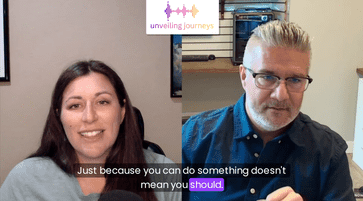
Just Because AI Can Do Something Doesn’t Mean You Should
One of Sean’s most important observations about AI is simple:
Just because you can automate something doesn’t mean you should.
AI creates enormous opportunities.
It also creates enormous rabbit holes.
A company might spend 100 hours automating a task that previously required two hours per month.
Technically impressive?
Maybe.
Good business decision?
Probably not.
Before investing heavily in an AI solution, ask:
- What problem are we solving?
- How much time does the current process consume?
- How much will implementation cost?
- What information will the AI system access?
- What happens if the AI is wrong?
- Does a human still need to review the output?
- How much time will this realistically save?
- Does it create security or privacy risks?
- Will employees actually use it?
- Is there a simpler solution?
Technology should serve the business.
Not the other way around.
7 Signs Your Business May Need Managed IT Services
How do you know when you’ve outgrown your current approach to IT?
Here are several warning signs.
1. Employees Regularly Troubleshoot Their Own Technology
Your employees should be doing the work you hired them to do, not spending hours troubleshooting computers and software.
2. Nobody Clearly Owns IT
If nobody can clearly explain who is responsible for your technology environment, that’s a problem.
3. IT Is Mostly Reactive
If you only call someone when something breaks, you don’t have an IT strategy.
You have emergency support.
4. Employee Access Isn’t Properly Managed
There should be a consistent process for creating and removing employee accounts, devices and permissions.
5. You’re Not Confident About Your Backups
“We think everything is backed up” isn’t enough.
6. Employees Are Using AI Without Guidelines
If employees are putting company information into AI tools without policies, your business may already have an AI governance risk.
7. Your Company Is Growing Quickly
Growth exposes weak systems.
The faster you grow, the more important proper technology planning becomes.
How to Choose a Managed IT Provider
Choosing an MSP shouldn’t be based entirely on price.
Your IT provider may have access to some of your company’s most important systems and information.
Trust matters.
Before selecting a provider, ask:
- Will they explain technology clearly?
- Are they proactive or primarily reactive?
- Do they understand businesses our size?
- Can they support future growth?
- How do they approach cybersecurity?
- How are backups handled?
- What happens when employees join or leave?
- Can they provide on-site assistance?
- How do they approach AI governance?
- Who will manage our account?
- How quickly can employees get help?
- Do we actually trust the people we’re working with?
The last question may be the most important.
Why Stillwater Prefers Meeting Clients
Even though many IT services can be delivered remotely, Stillwater prefers meeting potential clients in person whenever practical.
Why?
Because good IT starts with understanding the business.
Before recommending technology, an IT provider should understand:
- How your company operates
- Where you’re growing
- How employees work
- Which systems are critical
- Where employees experience frustration
- What management wants to improve
- What risks concern leadership
Technology should follow the business strategy.
Not the other way around.
The Bigger Lesson Behind Stillwater IT Solutions
Stillwater’s story is about more than technology.
It’s also about relationships.
Sean entered the IT industry because someone saw value in his ability to communicate with people.
An early business acquisition happened because someone trusted him.
Losing a customer led him to learn from a competitor.
A random internet salesperson eventually helped create the connection that introduced Sean to an important business partner.
Long-standing relationships helped Stillwater grow when the company launched.
Again and again, opportunities came through people.
That’s why Stillwater’s relationship-first philosophy isn’t simply marketing.
It’s how the company itself was built.
Technology Should Make Business Simpler
Technology will continue becoming more important.
AI will become part of more business processes.
Cybersecurity risks will continue evolving.
Remote work will continue changing how employees access company information.
Cloud platforms will become increasingly interconnected.
Businesses will depend on more technology, not less.
But that doesn’t mean business owners need to become IT experts.
They need the right advisors.
That’s the role Stillwater IT Solutions wants to play.
Not simply fixing computers.
Not simply responding when something breaks.
But helping businesses make smarter technology decisions before problems happen.
The goal is simple:
Build reliable technology. Reduce unnecessary complexity. Protect the business. And create an IT environment that can grow with you.
Need Help Managing Your Business IT?
If your company is growing and technology is becoming harder to manage, it may be time to evaluate your IT environment.
Stillwater IT Solutions works with businesses looking for a proactive approach to IT infrastructure, employee support, backups, technology planning, cybersecurity foundations and AI governance.
Instead of waiting for the next problem, start by understanding where your technology stands today.
Talk to Stillwater IT Solutions about your business IT needs.