
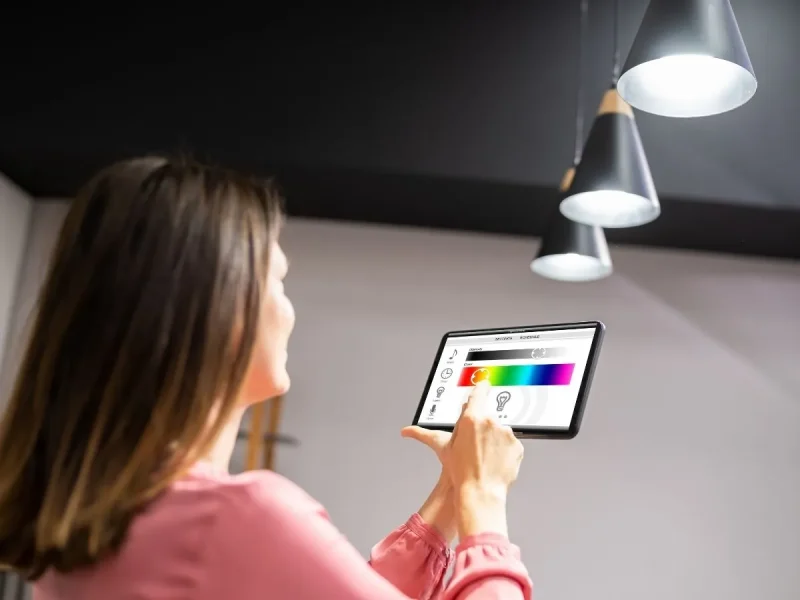
Many homeowners are looking for practical ways to lower their monthly utility bills without sacrificing comfort or convenience. While major upgrades such as heat pumps and new insulation often receive the most attention, smaller technologies can also have a meaningful impact on household energy consumption. One of the most effective examples is smart lighting systems. These systems do much more than allow homeowners to turn lights on and off with a smartphone. They help manage how, when, and where energy is used throughout the home.
The Hidden Cost of Leaving Lights On
Most homeowners know that leaving lights on unnecessarily wastes electricity. However, few people realize how often this happens throughout the course of a typical week. Lights may remain on in empty rooms, outdoor fixtures may run longer than necessary, and family members may forget to switch lights off before leaving the house.
These small habits often seem insignificant in isolation. Over time, however, they contribute to higher electricity consumption and unnecessary energy costs. The challenge is not usually a lack of awareness but rather the realities of busy daily routines. Homeowners have countless responsibilities competing for their attention, making it easy for lighting efficiency to be overlooked.
This is where smart lighting systems create value. Instead of relying entirely on human behaviour, they automate many of the decisions that influence lighting usage. The result is a home that consumes less electricity without requiring constant attention from its occupants.
Lighting Only Where and When It Is Needed
Traditional lighting systems operate on a simple principle: lights remain on until someone turns them off. Smart lighting introduces a much more intelligent approach by allowing lighting to respond to real-world conditions.
For example, occupancy sensors can automatically turn lights on when someone enters a room and switch them off when the space becomes vacant. This eliminates the common problem of lights remaining on in unused areas such as bathrooms, laundry rooms, basements, and hallways.
Scheduling features provide another layer of control. Homeowners can create automated routines that ensure lights operate only during specific periods. Rather than relying on memory, lighting follows a predetermined schedule that aligns with household activity patterns. This reduces waste while maintaining convenience.
Why Brightness Matters More Than Most People Realize
Many homeowners assume that lights have only two settings: on and off. Smart lighting systems introduce the ability to adjust brightness levels based on actual needs throughout the day.
Consider a kitchen during the evening. Full brightness may be useful while preparing meals, but significantly less light may be needed later when the family is relaxing. Dimming lights reduces energy consumption while also creating a more comfortable environment.
This principle applies throughout the home. Bedrooms, living rooms, hallways, and outdoor spaces often do not require maximum brightness at all times. Smart lighting allows homeowners to customize lighting levels based on activities, preferences, and time of day. Over time, these adjustments contribute to measurable energy savings.
Using Natural Light More Effectively
One of the most overlooked benefits of smart lighting systems is their ability to work alongside natural daylight. Many homes receive substantial sunlight during certain periods of the day, yet artificial lighting often remains in use regardless.
Advanced lighting systems can detect ambient light levels and automatically adjust indoor lighting accordingly. If sufficient natural light is available, the system reduces or eliminates unnecessary artificial lighting. As daylight levels change, lighting adjusts automatically to maintain a comfortable environment.
This creates a seamless experience for homeowners while reducing electricity consumption. Rather than treating natural and artificial light as separate systems, smart technology allows them to work together more efficiently.
Outdoor Lighting Is Often a Bigger Energy User Than Expected
When homeowners think about energy savings, they typically focus on interior lighting. However, exterior lighting can also contribute significantly to household electricity usage.
Landscape lighting, pathway lights, decorative fixtures, and security lighting often operate for extended periods each night. In many cases, outdoor lights run longer than necessary simply because there is no automated control system in place.
Smart lighting solutions allow homeowners to manage outdoor lighting more effectively through scheduling, motion sensors, and remote control features. Lights can activate only when needed, helping reduce energy consumption while maintaining safety and security. This balance between efficiency and functionality is one reason outdoor automation continues to gain popularity.
Creating Energy-Efficient Habits Without Thinking About Them
One reason many energy-saving strategies fail is that they rely heavily on consistency. Even homeowners with the best intentions may forget to adjust settings or turn lights off during busy days.
Smart lighting removes much of this burden by automating energy-efficient behaviour. Once schedules and preferences are established, the system operates independently. Homeowners continue to enjoy well-lit spaces without constantly managing switches and timers.
This automation creates long-term benefits because savings occur consistently. Rather than depending on daily effort, energy efficiency becomes built into the home’s operation. For many households, this convenience is just as valuable as the utility savings themselves.
Smart Lighting and the Connected Home
Smart lighting is often one of the first technologies homeowners adopt when building a connected home. Unlike some smart devices that serve a single purpose, lighting interacts with many other systems throughout the property.
For example, lighting can work alongside:
- Security systems
- Smart locks
- Video doorbells
- Window coverings
- Voice assistants
- Home automation platforms
- Energy management systems
This integration allows homeowners to create customized routines that improve both convenience and efficiency. A single command or automated routine can adjust lighting throughout the home based on occupancy, schedules, or security settings.
As more homeowners embrace smart home technology, lighting is becoming a central component of broader automation strategies.
What Homeowners Often Overlook When Planning Smart Lighting
Many homeowners focus exclusively on the fixtures and devices themselves while overlooking the importance of planning. The most successful smart lighting projects begin by identifying how spaces are used and where automation can provide the greatest value.
For example, a hallway used briefly throughout the day may benefit from motion sensors. A living room may benefit from programmable scenes that adjust lighting for different activities. Outdoor areas may require schedules that change seasonally based on daylight hours.
Electrical professionals often encourage homeowners to think about daily routines before selecting products. This approach helps ensure the technology supports real-life needs rather than becoming a collection of disconnected gadgets.
Professionals such as Castle Electric frequently work with homeowners to identify opportunities where smart lighting can improve both efficiency and usability. Their experience helps homeowners create systems that are practical, scalable, and aligned with long-term goals.
A Growing Trend Among BC Homeowners
Throughout Vancouver, Burnaby, Coquitlam, Port Moody, and the Fraser Valley, electricians are seeing growing interest in lighting systems that combine convenience with energy management. Homeowners are increasingly looking for solutions that reduce electricity consumption without compromising comfort or aesthetics.
Many projects now involve integrating lighting controls with broader smart home ecosystems. Homeowners want systems that communicate with security devices, outdoor lighting, entertainment spaces, and energy monitoring platforms. This trend reflects a broader shift toward connected homes that actively help manage household energy usage.
As adoption continues to grow, smart lighting is becoming less of a technology upgrade and more of a standard feature in modern homes. Homeowners interested in automation, energy efficiency, and convenience can explore Castle Electric’s full range of electrical services to learn more about smart home solutions and lighting upgrades.
Resources for Energy Efficiency
Smart lighting is just one of many ways homeowners can improve efficiency and modernize their properties. Homeowners can explore a variety of trusted home services through Home Services BC and connect with experienced professionals throughout British Columbia. We also encourage homeowners to listen to the Home Services BC Podcast for expert insights on energy efficiency, home technology, renovations, and maintenance. Those who want access to additional homeowner resources and updates can join the Home Services BC community and stay informed about emerging trends and technologies.
FAQs About Smart Lighting Systems
Do smart lighting systems actually save energy?
Yes. Smart lighting systems reduce unnecessary lighting usage through automation, occupancy sensing, scheduling, and dimming controls, helping lower overall electricity consumption.
Are smart lighting systems worth it for Vancouver homeowners?
Many homeowners find that the combination of energy savings, convenience, and improved home automation makes smart lighting a worthwhile investment.
Can smart lighting be installed in existing homes in Burnaby?
Yes. Many smart lighting solutions can be integrated into existing homes without requiring major renovations.
Do smart lighting systems work with voice assistants?
Most modern systems can integrate with popular voice assistants and smart home platforms, allowing for hands-free control.
Can smart lighting control outdoor fixtures in Coquitlam?
Yes. Outdoor lighting can often be automated through schedules, motion detection, and remote controls to improve both efficiency and security.
Who should install smart lighting systems in the Fraser Valley?
Homeowners should work with qualified electrical professionals who understand smart home integration, lighting design, and electrical safety requirements.
Final Thoughts
Smart lighting systems offer much more than convenience. By automating lighting schedules, responding to occupancy, adjusting brightness levels, and integrating with broader smart home technologies, these systems help homeowners reduce energy consumption while improving everyday comfort. As more BC homeowners look for practical ways to manage utility costs and modernize their homes, smart lighting continues to stand out as one of the most accessible and effective solutions available. If you are considering smart lighting upgrades or other home automation solutions, you can contact Castle Electric to discuss your goals and explore options that fit your home and lifestyle.