
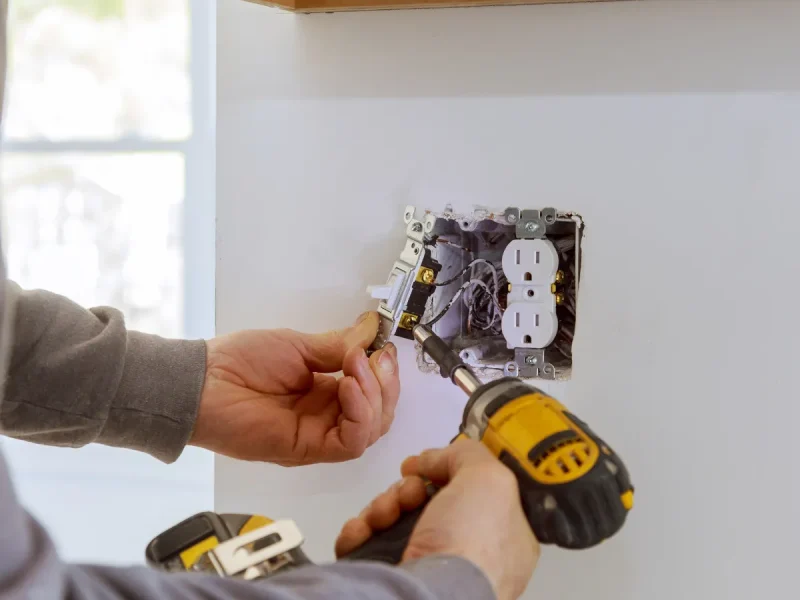
Building a custom home is one of the biggest financial and personal decisions most people will ever make, and the excitement of choosing floor plans and finishes can easily overshadow the systems working behind the walls. Electrical planning is one of those areas that homeowners often assume will simply come together once construction starts, but the truth is that decisions made in the earliest design stages have a lasting impact on how the finished home functions.
A custom home electrician does far more than run wire once the framing is up, and bringing one into the process early can save you from costly changes down the road. At Home Services BC, we’ve worked with enough new build clients to know that the homes people are happiest with are almost always the ones where electrical planning happened alongside architectural design, not after it. This guide covers what a custom home electrician actually does, the decisions you’ll need to make, and how to set your project up for success from day one.
Why Electrical Planning Belongs in the Design Phase
Many homeowners assume electrical work is something that happens later in construction, once the foundation is poured and the framing is complete. In reality, a custom home electrician should be involved as early as the design phase, working alongside your architect or designer to make sure the home’s layout supports its electrical needs. This early involvement matters because things like panel location, service size, and major circuit routing are far easier and cheaper to plan on paper than to change once walls are framed.
It also gives you the chance to think through lifestyle features, such as a future electric vehicle charger or a home theatre room, before the budget and blueprints are finalized. Waiting until construction is underway to bring in an electrician often means working around decisions that have already been made, rather than making decisions that actually serve the home’s electrical needs. Homes built this way tend to run more smoothly during construction and require far fewer change orders once work is underway.
Determining the Right Electrical Service Size
One of the first and most important decisions a custom home electrician will help you make is the size of your home’s electrical service, meaning how much power comes into the house from the utility connection. This number is typically measured in amps, and choosing the right size depends on the home’s square footage, the number of major appliances planned, and any future additions you might want to support.
A home with an electric vehicle charger, a hot tub, a workshop, and central air conditioning needs significantly more capacity than a modest home without these features. Undersizing your service is one of the most expensive mistakes to correct later, since upgrading an electrical service after the home is built often means digging up buried lines and coordinating with the utility company. Getting this number right from the start, based on both your current needs and reasonable plans for the future, is one of the clearest ways a custom home electrician adds long term value to your build.
Planning Panel Location and Circuit Layout
Where your electrical panel sits in the home might seem like a minor detail, but it actually affects wiring efficiency, future accessibility, and even resale value. A custom home electrician will work with your builder to choose a panel location that’s central to the home’s major electrical loads, which reduces wiring costs and voltage drop over long circuit runs. From there, circuit layout planning determines how outlets, switches, and dedicated lines are distributed throughout the house, including which rooms need extra capacity for things like home offices, media rooms, or kitchens with multiple high draw appliances. Thinking through circuit layout at this stage also makes it much easier to add smart home features later, since the wiring infrastructure can be built with those upgrades in mind. Here are a few specific items worth discussing with your electrician during this stage of planning:
- Dedicated circuits for kitchen appliances, laundry equipment, and any workshop or garage space
- Panel capacity reserved for future additions like an EV charger or backup generator
- Low voltage wiring for home networking, security systems, and audio visual equipment
- Outdoor circuit planning for landscape lighting, irrigation systems, or a future pool
Working through this list early prevents the frustrating experience of realizing halfway through construction that a feature you wanted simply wasn’t planned for.
Smart Home and Future Technology Considerations
Custom home builds are one of the best opportunities to future proof a house for smart technology, since running wiring during construction is far simpler and less expensive than retrofitting it later. Even homeowners who aren’t ready to commit to a fully smart home often benefit from having conduit and wiring infrastructure in place for things like smart thermostats, security cameras, and automated lighting.
A custom home electrician can help you decide which technologies are worth wiring for now versus which can be added wirelessly later without much hassle. This is also the right time to think about structured wiring for whole home audio, network hardwiring for reliable internet in a home office, and charging infrastructure in the garage for electric vehicles. Because technology continues to evolve quickly, a good electrician will build in flexibility rather than locking you into a single system, which protects your investment as your needs change over the years.
Coordinating Electrical Work With Other Trades
A custom home build involves dozens of decisions happening simultaneously across multiple trades, and electrical work touches nearly all of them in some way. Your custom home electrician needs to coordinate closely with the HVAC contractor to avoid conflicts between ductwork and wiring runs, with the plumber to make sure electrical and water lines don’t cross paths, and with your general contractor to keep the overall schedule on track.
This kind of coordination is one of the reasons experience matters so much when choosing an electrician for a custom build, since new home construction moves quickly and mistakes discovered late are far more expensive to fix. Builders who have worked with the same trusted electrical contractors on multiple projects tend to have smoother builds overall, simply because the working relationships and communication patterns are already established. If you’re assembling your own team of professionals for a custom build, reviewing the full range of home services available through Home Services BC can help you find contractors who are used to working together on new construction projects.
Choosing an Electrician With Custom Home Experience
Not every electrician has significant experience with custom home construction, since it requires a different approach than renovation or repair work. When interviewing potential electricians for your build, ask specifically about their experience with new construction, their familiarity with your municipality’s permitting process, and how they typically coordinate with architects and builders during the design phase.
A strong custom home electrician will ask you thoughtful questions about how you plan to use each room, rather than simply following a generic wiring template. It’s also worth asking how they handle unexpected issues that arise during construction, since even well planned custom builds run into surprises along the way. Companies like Castle Electric bring this kind of new construction experience to the table, and reviewing their services page is a good way to understand the specific scope of custom home work they handle before reaching out for a consultation.
Budgeting Realistically for Custom Home Electrical Work
Electrical work is a significant portion of any custom home budget, and homeowners are often surprised by how much the final cost can shift based on decisions made throughout the design process. Features like smart home wiring, outdoor lighting, and EV charger infrastructure all add to the electrical budget, and it’s much easier to plan for these costs upfront than to add them as expensive change orders later.
Getting a detailed quote based on your actual home plans, rather than a rough per square foot estimate, gives you a far more accurate picture of what to expect. This is especially important for custom builds, where every home is different and generic pricing simply doesn’t capture the full scope of the work involved. Requesting a quote through Castle Electric’s online estimate tool early in your planning process can help you build a realistic electrical budget before construction begins, which reduces the chance of unpleasant surprises later.
Frequently Asked Questions
When should I bring an electrician into my custom home build?
Ideally, during the design phase, before blueprints are finalized. This allows the electrician to influence panel location, service size, and circuit planning while changes are still easy and inexpensive to make.
How do I know what size electrical service my custom home needs?
This depends on your home’s square footage, planned appliances, and any future additions like an EV charger or hot tub. A custom home electrician can calculate this based on your specific plans rather than a generic estimate.
Should I wire my custom home for smart technology even if I’m not ready to use it yet?
Yes, in most cases, since running wiring and conduit during construction is far cheaper than retrofitting it later. Even basic infrastructure gives you flexibility to add smart features whenever you’re ready.
How does electrical work get coordinated with other trades during a custom build?
Your electrician should communicate directly with your HVAC contractor, plumber, and general contractor to avoid conflicts and keep the project schedule on track. This coordination is one of the most important parts of a smooth custom home build.
Why does electrical budgeting vary so much between custom homes?
Every custom home has different features, layouts, and technology needs, which means generic per square foot pricing rarely reflects the actual cost. A detailed quote based on your specific plans gives a much more accurate budget.
Final Thoughts
Building a custom home is a rare opportunity to get every detail right from the start, and electrical planning deserves just as much attention as the finishes and floor plan you’ve been dreaming about. Bringing a custom home electrician into the process early, thinking carefully about service size and smart technology, and choosing a contractor with real new construction experience all set the foundation for a home that works exactly the way you need it to.
If you’re starting to build your project team, registering with Home Services BC is a simple way to connect with trusted professionals who understand custom builds. For homeowners who want an electrical partner with genuine experience guiding new construction from blueprint to final inspection, Castle Electric has the expertise to help your custom home come together exactly as planned.