
Eco-friendly living is no longer just a trend, it’s a smart investment. Many homeowners in British Columbia want to reduce their environmental footprint, but they also want practical upgrades that will save money in the long run. The good news is that eco-friendly upgrades can do both.
From energy-efficient windows to solar panels, there are countless ways to make a home greener while lowering monthly expenses. This guide explores eco-friendly upgrades that offer lasting savings, comfort, and value.
Why Eco-Friendly Upgrades Matter
The conversation around eco-friendly home upgrades has shifted decisively in recent years, moving well beyond environmental idealism into the realm of practical financial planning. Homeowners who invest in energy- and water-efficient systems are not making a sacrifice for the planet so much as they are making a calculated decision to reduce the recurring costs that quietly erode household budgets month after month. Lower utility bills, improved indoor air quality, and more consistent interior temperatures are immediate and tangible benefits that residents feel from the very first billing cycle after an upgrade is completed. These quality-of-life improvements make a home more comfortable and healthier to live in, reducing drafts, dampness, and the airborne pollutants that poorly ventilated or inefficiently heated homes tend to accumulate.
The financial case for eco-friendly upgrades is further strengthened by the growing alignment between buyer preferences and sustainable home features in the British Columbia real estate market. Environmentally conscious buyers are not a niche demographic anymore but a mainstream and growing segment of the purchasing population, and they are increasingly willing to pay a premium for homes that already reflect their values and reduce their anticipated operating costs. Government rebate programs and tax incentives available in BC further lower the effective cost of many upgrades, improving the return on investment and shortening the payback period considerably. When environmental responsibility, personal comfort, reduced monthly expenses, and stronger resale value all point in the same direction, the case for acting sooner rather than later becomes difficult to argue against.
Energy-Efficient Windows and Doors
Heating and cooling account for a large portion of household energy use. Upgrading to energy-efficient windows and doors makes a major difference.
- Double- or triple-pane glass prevents heat loss.
- Low-E coatings reduce UV rays and improve comfort.
- Proper sealing stops drafts and lowers heating bills.
In BC’s varied climate, these upgrades quickly pay for themselves through energy savings.
Upgraded Insulation
Insulation is one of those home systems that works invisibly and constantly, and its absence or inadequacy is felt most acutely during the extremes of the heating and cooling seasons when energy bills spike to their highest levels. A poorly insulated attic, for instance, allows an enormous amount of conditioned air to escape through the roof, forcing heating and cooling systems to run longer and work harder to maintain comfortable interior temperatures. Adding high-quality insulation to attics, exterior walls, and basement assemblies creates a continuous thermal barrier that dramatically reduces this energy loss, keeping warmth inside during BC’s cold, wet winters and blocking solar heat gain during the warmer summer months. The result is a home that reaches and holds its target temperature more efficiently, placing far less demand on mechanical systems and extending their operational lifespan in the process.
The choice of insulation material matters as much as the decision to insulate, and different applications call for different solutions. Spray foam insulation is particularly effective at sealing irregular gaps, penetrations, and hard-to-reach cavities where air leakage would otherwise undermine the performance of any other insulation installed nearby. Cellulose, made from recycled paper products, and fibreglass batts offer more affordable options for standard wall and attic applications, delivering solid thermal performance at a price point that makes whole-home upgrades financially accessible. Regardless of the material chosen, professionally installed insulation that meets or exceeds BC building code requirements consistently delivers a measurable reduction in heating and cooling costs from year one, making it one of the most reliable and straightforward eco-friendly upgrades available to homeowners.
Smart Thermostats
A smart thermostat is one of the most accessible and immediately impactful eco-friendly upgrades a homeowner can install, requiring no structural changes, no professional trades, and typically no more than an afternoon of setup time. Unlike conventional programmable thermostats that rely on manually entered schedules, smart thermostats use sensors and machine learning algorithms to observe the patterns of a household over days and weeks, gradually building an accurate picture of when spaces are occupied and what temperatures the occupants prefer at different times of day. This learned intelligence allows the system to begin heating or cooling a space just before it is needed and to pull back automatically when the home is empty, eliminating the energy waste of conditioning unoccupied rooms to full comfort levels around the clock.
The remote control capability of smart thermostats adds a layer of flexibility that conventional systems simply cannot offer. A homeowner who leaves for work and forgets to adjust the thermostat can correct the oversight from a smartphone within seconds, and someone returning from an unexpected trip can ensure the home is comfortable upon arrival without running systems unnecessarily in the interim. Over the course of a full year, these small and frequent optimizations accumulate into energy savings that manufacturers and independent studies consistently estimate at around fifteen percent of annual heating and cooling costs. For a BC household running natural gas heat through a long winter, that figure translates into meaningful dollar savings that, combined with the relatively low purchase price of most smart thermostat models, typically produces a full return on investment within the first one to two years of use.
Solar Panels
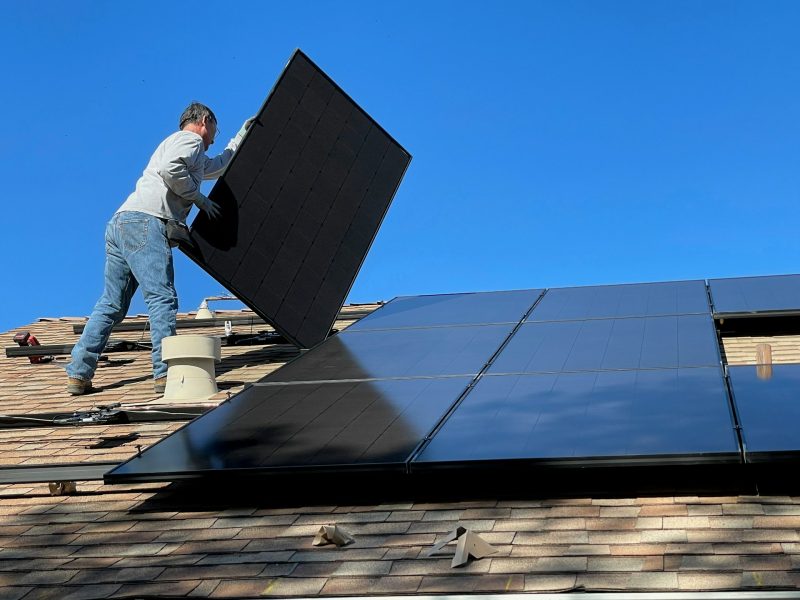
Solar panels represent the most transformative single upgrade available to homeowners who are serious about reducing their long-term energy costs and environmental footprint simultaneously. The upfront installation cost is significant, but it must be understood in the context of what it is replacing: decades of monthly electricity payments to a utility provider whose rates are subject to ongoing increases entirely outside the homeowner’s control. Once a solar array is installed and commissioned, the energy it generates is effectively free, produced by sunlight that falls on the roof regardless of what happens to hydro rates, energy markets, or inflation. In the sunnier regions of British Columbia, a well-sized residential solar system can offset a substantial portion or even the entirety of a household’s electricity consumption, with any surplus energy fed back into the grid generating credits that further reduce costs.
The financial case for solar strengthens considerably when the upgrade is viewed over its full operational lifespan rather than evaluated solely on installation cost. Most quality solar panel systems carry performance warranties of twenty-five years or more, and many continue producing energy well beyond that threshold with only gradual reductions in output. The payback period in BC’s sunnier interior regions typically falls in the ten-to-fifteen-year range, after which every kilowatt-hour generated represents pure savings. Resale value benefits compound this return further, as buyers increasingly understand and assign monetary value to a home that comes with an established, low-maintenance energy production system already in place. For environmentally conscious buyers in particular, a solar-equipped home carries both practical and symbolic appeal that distinguishes it meaningfully from comparable properties on the market.
Energy-Efficient Appliances
Household appliances run continuously in the background of daily life, and their cumulative energy and water consumption adds up to a surprisingly large share of a home’s total utility costs over the course of a year. Older refrigerators, dishwashers, and washing machines were designed and manufactured before efficiency standards reached their current levels, and many consume significantly more electricity and water per cycle than their modern Energy Star-certified counterparts. Replacing these aging units is not merely an aesthetic or functional upgrade but a genuine operational investment, as the savings generated by more efficient models begin accumulating from the first month of use and continue compounding for the full lifespan of the appliance. Refrigerators, which run twenty-four hours a day every day of the year, are particularly impactful targets for replacement, with modern efficient models using a fraction of the electricity that units from even a decade ago required.
Beyond refrigerators and dishwashers, the shift toward induction cooktops represents one of the more significant leaps in kitchen energy efficiency available to today’s homeowners. Induction technology heats cookware directly through electromagnetic energy rather than generating heat through an element or flame and then transferring it to the pot, a process that wastes a substantial amount of energy into the surrounding air. The result is faster cooking times, a cooler kitchen environment, and measurably lower electricity consumption per meal prepared. High-efficiency washing machines that use cold water and optimized drum technology similarly reduce both electricity and water consumption per load without compromising cleaning performance. Together, a thoughtfully chosen suite of Energy Star appliances can reduce a household’s annual utility spend by hundreds of dollars while also reducing the environmental footprint of everyday domestic life.
Tankless Water Heaters
Traditional storage tank water heaters operate on a fundamentally inefficient principle: they heat a large volume of water to a set temperature and then maintain that temperature continuously, consuming energy around the clock regardless of whether anyone in the home is actually using hot water at that moment. This standby heat loss, as it is technically known, represents a constant and unavoidable drain on energy consumption that traditional tank systems are inherently unable to eliminate. Over a full year, the cumulative cost of keeping forty or sixty gallons of water perpetually hot is substantial, and it occurs whether the household uses a great deal of hot water or very little. For homes where hot water demand is concentrated in the mornings and evenings with long idle periods in between, the mismatch between the system’s operating pattern and the household’s actual needs is particularly pronounced.
Tankless water heaters resolve this inefficiency by heating water instantaneously on demand, activating only when a hot water tap is opened and shutting down completely when that tap is closed. The energy reduction this produces compared to a conventional tank system is consistently measured at twenty to thirty percent, a meaningful figure that compounds into significant savings over the ten-to-twenty-year lifespan of a quality tankless unit. The space savings are an additional practical benefit, as a tankless unit mounts compactly on a wall and frees up the floor space that a bulky storage tank would otherwise occupy, a genuine advantage in smaller homes or utility rooms where every square metre counts. While the upfront installation cost exceeds that of a standard tank replacement, the combination of lower operating costs, longer equipment lifespan, and the elimination of the risk of tank leaks or flooding makes the tankless investment financially sound over any reasonable time horizon.
LED Lighting
Lighting is so embedded in the daily background of home life that most homeowners rarely stop to consider its contribution to their electricity bill, yet the cumulative energy draw of incandescent and older fluorescent bulbs running across an entire house adds up to a meaningful share of monthly utility costs. The transition to LED technology is one of the simplest, most affordable, and most immediately rewarding eco-friendly upgrades available, requiring nothing more than replacing bulbs in existing fixtures. LEDs achieve the same or superior light output as incandescent bulbs while consuming up to eighty percent less electricity, a reduction so dramatic that the savings on a single bulb are noticeable within the first billing period. Multiplied across every light fixture in a home and sustained over years of daily use, the cumulative financial impact of a full-house LED conversion is far greater than the modest upfront cost of the bulbs themselves.
Longevity is the other dimension of LED technology that makes it such a compelling upgrade. Where a standard incandescent bulb might last one thousand hours before burning out, a quality LED bulb is rated for twenty thousand to twenty-five thousand hours of use, meaning that a bulb installed today in a fixture used for several hours each evening may not need replacing for well over a decade. This extended lifespan eliminates the recurring cost and inconvenience of frequent bulb replacements and is particularly valuable in hard-to-reach fixtures where changing a bulb requires a ladder or significant effort. The variety of LED options now available, spanning warm and cool colour temperatures, dimmable configurations, and a wide range of form factors, means that homeowners can match the lighting quality and ambiance they prefer in every room without making any aesthetic compromise in exchange for the efficiency benefits.
Water-Saving Fixtures
Eco-friendly upgrades aren’t limited to energy. Water-saving fixtures reduce waste and lower utility bills.
- Low-flow showerheads and faucets maintain pressure while cutting water use.
- Dual-flush toilets save thousands of litres per year.
- Smart irrigation systems prevent overwatering lawns.
In BC, where water costs can add up, these upgrades bring significant long-term savings.
Green Roofing Materials
The roof is one of the largest surface areas of any home and one of the most significant contributors to heat gain and energy loss, yet roofing choices are often made based primarily on upfront cost and aesthetic preference without full consideration of their long-term efficiency implications. Conventional asphalt shingles absorb solar radiation effectively, transferring that heat into the attic space below and increasing cooling loads during warm weather, a cycle that drives up energy consumption and accelerates the degradation of both the roofing material and the attic assembly beneath it. Cool roofing materials, which are engineered with reflective surfaces or coatings that redirect solar energy away from the building rather than absorbing it, break this cycle by keeping roof surface temperatures significantly lower on hot days. The downstream effect is a measurable reduction in attic heat accumulation, lower demand on air conditioning systems, and a more comfortable interior environment throughout the warmer months.
Metal roofing and living green roofs represent two additional directions in eco-friendly roofing, each with distinct advantages suited to different home types and climates. Metal roofs are exceptionally durable, often carrying warranties of forty to fifty years, and their smooth surfaces shed BC’s heavy rainfall and winter snow loads efficiently, reducing the risk of moisture intrusion that causes so much long-term structural damage in the province’s wetter regions. Green roofs, which support a layer of vegetation over a waterproof membrane, provide excellent insulation, absorb rainwater to reduce runoff pressure on drainage systems, and contribute meaningfully to urban biodiversity. While both options carry higher installation costs than conventional asphalt, their extended lifespans mean that the total cost of ownership over the life of a building is often lower, making the initial investment a financially defensible choice as well as an environmentally responsible one.
Electric Vehicle (EV) Charging Stations
As more people switch to electric vehicles, installing a home charging station is a valuable upgrade.
- Saves money on fuel compared to gas-powered cars.
- Increases property appeal for future buyers.
- May qualify for BC government rebates.
This eco-friendly addition pays off for both current use and resale value.
Rainwater Harvesting Systems
Collecting rainwater for outdoor use reduces water bills and supports sustainable living.
- Ideal for watering gardens or washing cars.
- Reduces demand on municipal systems.
- Easy to install with above-ground barrels or more advanced underground systems.
Over time, these systems save both money and resources.
The Long-Term Financial Benefits
The true financial power of eco-friendly home upgrades reveals itself not in any single improvement but in the compounding effect of multiple systems working together over an extended period. A homeowner who installs LED lighting, upgrades insulation, replaces aging appliances, and adds a smart thermostat in the same year does not simply save the sum of each upgrade’s individual contribution; they create a home that operates more efficiently as an integrated system, with each improvement reinforcing the others. Better insulation reduces the heating load that the smart thermostat manages, which reduces the energy drawn from the grid that solar panels or lower utility rates would otherwise need to cover. Viewed over a ten or twenty-year horizon, these stacked efficiencies translate into savings that can amount to tens of thousands of dollars, numbers that dwarf the upfront investment required to achieve them.
Beyond the direct utility savings, the financial benefits of eco-friendly upgrades extend into the realm of property value and market positioning. Homes that have been comprehensively upgraded for efficiency are appraised higher, sell faster, and attract a broader and increasingly motivated pool of buyers who understand and are willing to pay for reduced ongoing operating costs. In a real estate market where buyers are scrutinizing monthly expenses as carefully as purchase price, a home with demonstrably lower utility bills, government-rebated upgrades, and modern energy systems is a fundamentally more attractive proposition than a comparable home that lacks these features. The combination of immediate cost reduction, long-term savings accumulation, enhanced daily comfort, and strengthened resale position makes the financial argument for eco-friendly upgrades as compelling as the environmental one, removing any meaningful reason to delay.
Eco-Friendly Upgrades That Boost Resale Value
In BC’s competitive housing market, eco-friendly features stand out. Buyers increasingly look for:
- Energy-efficient appliances.
- Modern insulation and windows.
- Smart home technology.
- Solar-ready or solar-equipped homes.
Homes with these upgrades sell faster and often at higher prices.
Final Thoughts
Investing in eco-friendly upgrades is one of the smartest decisions a homeowner can make. From windows and insulation to solar panels and water-saving fixtures, these improvements save money, increase comfort, and boost property value. For BC homeowners, going green pays off in more ways than one. With the right upgrades, homes become more efficient, eco-conscious, and appealing to future buyers.
And when it comes to finding trusted professionals to complete these projects, Home Services BC is the go-to resource. Their network of reliable contractors, electricians, and roofers ensures upgrades are done right, the first time. Ready to start saving money while living sustainably? Visit Home Services BC to find trusted local experts who can help with eco-friendly upgrades big and small. Make the change today, your wallet and the planet will thank you!
Comments